• Home
    • About
    • Contact
    • Site Member Access
    • Inner Splendor Articles
  • Meditation
    • Guided Meditations
    • Music for Deep Meditation
  • Relaxation
  • Sleep Aid
    • Self-Hypnosis Albums
    • Music for Deep Sleep
    • Sounds of Nature
  • All Albums
  • Uplifting News

Inner Splendor Media

  • Home
    • About
    • Contact
    • Site Member Access
    • Inner Splendor Articles
  • Meditation
    • Guided Meditations
    • Music for Deep Meditation
  • Relaxation
  • Sleep Aid
    • Self-Hypnosis Albums
    • Music for Deep Sleep
    • Sounds of Nature
  • All Albums
  • Uplifting News

The first trailer for Practical Magic 2 is out, and it looks like such wicked fun! 

The first trailer for Practical Magic 2 is finally here, and it’s already stirring up excitement among fans of the original. If you haven’t seen it yet, it’s absolutely worth sharing—the tone looks beautifully nostalgic while still bringing a fresh, darker, and more magical edge. The visuals lean into that cozy, witchy atmosphere people loved the first time around, with hints of humor, sisterhood, and a deeper continuation of the Owens family story. It feels like one of those rare sequels that actually respects the original while expanding the world.

As for how this sequel came together, it’s been a long time coming. For years, there were rumors and fan demand, but getting the original cast aligned and the right script in place took time. The project finally gained momentum when key returning cast members showed interest in revisiting their roles, alongside a new generation of characters to carry the story forward. While details are still emerging, the film is expected to bring back core original stars while introducing new faces to expand the legacy. The official release date hasn’t been firmly confirmed yet, but it’s expected to arrive sometime in the near future—making now the perfect time to build hype and share the trailer while anticipation is high.


04/20/2026

  • Leave a comment
  • Share
    The first trailer for Practical Magic 2 is out, and it looks like such wicked fun!

    Share link

Iran’s Supreme Leader Ali Khamenei Confirmed Dead, Body Found After U.S.–Israeli Strikes 

Today, several major international news agencies cited unnamed Israeli and U.S. sources saying the body of Iran’s Supreme Leader Ayatollah Ali Khamenei has been located and that his death has been confirmed by those officials following a targeted military operation. Reuters reported that an Israeli official claimed the body was found in Tehran after strikes hit leadership sites, and photographs of the body were reportedly shown to Israeli Prime Minister Benjamin Netanyahu and former U.S. President Donald Trump. 

U.S. and Israeli government messaging framed the strikes as part of a broader offensive aimed at dismantling what they described as Iran’s capacity to threaten regional stability, including its missile and nuclear infrastructure. 

However, Iranian officials have strongly denied these claims, with state media describing the reporting as psychological warfare and insisting Khamenei remains alive and commanding forces. There is no independent official confirmation yet from Tehran. 


A Long, Controversial Reign Comes Under Fire

Ayatollah Ali Khamenei had ruled Iran since 1989, after the death of Ayatollah Ruhollah Khomeini, becoming one of the most enduring and powerful authoritarian leaders in the Middle East. As Supreme Leader, he wielded ultimate authority over Iran’s military, judiciary, and foreign policy, shaping Iranian power projection through support for proxy groups like Hezbollah and policies opposing U.S. and Israeli interests. 

Under his leadership, Iran’s domestic politics were characterized by strict control over dissent and periodic mass protests, including large demonstrations in 2022 and again in 2026 that were met with deadly crackdowns. His tenure also saw regional conflicts expand, with Iranian influence in Iraq, Syria, Yemen, and Lebanon deepening despite international sanctions. 

What the Reported Assassination Means for Iran’s Future

If confirmed, his death would mark a historic turning point for Iran. The Supreme Leader is not just a political figure but a central pillar of the Islamic Republic’s theocratic system. A successor would need to be chosen by the Assembly of Experts — a clerical body largely aligned with conservative factions — but there is no clear designated heir, raising questions about potential power struggles within Iran’s elite. 

Internally, decades of centralized authority mean that removing the top leader could embolden both reformist and hardline factions. Some analysts see the moment as a possible catalyst for broader political transformation, while others warn the existing security apparatus — especially the Islamic Revolutionary Guard Corps — may absorb power and maintain continuity of the regime’s hardline orientation. 

Externally, the event would reverberate across the Middle East and beyond. Regional rivals and allies alike have been closely watching U.S.–Iran tensions escalate over the past year. A confirmed power vacuum could trigger instability, shifts in alliances, and renewed conflicts given Iran’s role in proxy networks throughout the region. 

The Assassination

Multiple reports describe the strikes that allegedly killed Khamenei as part of a coordinated military campaign by the United States and Israel, sometimes referred to in media as Operation Epic Fury or similar operational codenames. These attacks reportedly involved precision airstrikes targeting multiple Iranian leadership, military, and infrastructure sites across Tehran and other strategic locations. 

U.S. leadership publicly acknowledged its role in planning and intelligence support for the offensive, framing the mission as a response to what they describe as existential threats posed by Iran’s missile programs and regional interventions. Israeli officials also took credit for targeting Khamenei’s compound directly. 

Iranian government spokespeople, for their part, rejected foreign claims and described state media reports as misinformation, saying Khamenei was safe and in control of military operations. They have denounced the strikes as illegitimate assaults on Iranian sovereignty.

02/28/2026

  • Leave a comment
  • Share
    Iran’s Supreme Leader Ali Khamenei Confirmed Dead, Body Found After U.S.–Israeli Strikes

    Share link

Supreme Court Rules Trump’s Emergency Tariffs Illegal — Here’s What It Will Mean 

On February 20, 2026, the U.S. Supreme Court ruled 6–3 that Trump’s “emergency” tariffs imposed under the International Emergency Economic Powers Act (IEEPA) were not authorized by that law, and therefore were illegal.  The core holding is simple: Congress writes tariff law, and IEEPA—an emergency sanctions statute—doesn’t clearly delegate a power as sweeping as across-the-board tariffs. 

What the decision means legally is bigger than tariffs: it’s a major boundary on presidential power. The Court treated these tariffs as a “vast economic significance” move that requires clear congressional authorization, and it applied the Court’s modern approach that agencies/presidents can’t claim enormous new powers from vague statutory wording.  In other words, the Court is signaling: if you want a president to have this kind of tariff power, Congress has to say so plainly—especially where the Constitution assigns taxing and trade powers primarily to Congress. 

Practically, tariffs collected under the struck-down IEEPA theory should stop being assessed going forward, because the legal foundation has been vacated/invalidated.  The messy part is what happens to money already collected: the ruling opens the door to very large refund claims, but it may not automatically mail checks—refund mechanics typically require claims processes, agency guidance (Customs/CBP), and potentially more litigation about timing and eligibility. 

You’ll likely see a surge of follow-on legal fights in the Court of International Trade and related courts over  how refunds are processed,  whether interest is owed, and (3) how far back claims can go (deadlines/protests/administrative steps).  Businesses that paid the duties will push for fast refunds; the government may argue for structured, slower processes or narrower eligibility depending on how the tariffs were paid and challenged. 

Politically and economically, this ruling reduces the president’s ability to impose sweeping tariffs by simply declaring an “emergency.”  But it does not end tariffs as a policy tool. The executive branch still has other, more traditional tariff routes (for example, trade statutes that explicitly contemplate tariffs and investigations), though they usually require procedures, findings, timelines, and are easier to challenge if shortcuts are taken. 

What happens next is likely a mix of (1) administrative guidance on stopping collections and handling refunds,  court-driven refund litigation unless Congress steps in with a clean refund mechanism, and  “Plan B” tariff strategies using other statutes that have clearer tariff language.  Net effect: the decision is a real check on emergency-power governance—it pushes tariff-making back toward Congress and structured trade-law channels, and it creates a near-term period of uncertainty while the refund and replacement-policy questions get resolved.

02/20/2026

  • Leave a comment
  • Share
    Supreme Court Rules Trump’s Emergency Tariffs Illegal — Here’s What It Will Mean

    Share link

Year of the Fire Horse Begins February 17, 2026: Meaning, Energy & What to Expect 

In Chinese astrology, the Year of the Fire Horse is considered one of the most dynamic and intense combinations in the zodiac cycle. The system is based on a 12-animal cycle—Rat, Ox, Tiger, Rabbit, Dragon, Snake, Horse, Goat, Monkey, Rooster, Dog, Pig—combined with the Five Elements: Wood, Fire, Earth, Metal, and Water. This creates a 60-year cycle, meaning a Fire Horse year only comes around once every six decades. The most recent Year of the Fire Horse was 1966; the next will be 2026. Because it blends the passionate nature of Fire with the freedom-loving spirit of the Horse, this year is often described as bold, volatile, and transformative.

The Horse in Chinese astrology symbolizes independence, movement, charisma, and physical vitality. People born under the Horse sign are often described as energetic, adventurous, and socially magnetic. According to astrologer Shelley Wu(author of Chinese Astrology: Exploring the Eastern Zodiac), the Horse carries strong yang energy—active, outward, expressive. It thrives on momentum and dislikes stagnation. In a Horse year, collective energy tends to accelerate; projects move quickly, people take risks, and there is less tolerance for restriction or routine.

Fire, as an element, intensifies whatever it touches. In Chinese cosmology, Fire represents passion, visibility, illumination, and sometimes impulsiveness. When combined with the Horse, this creates what many astrologers describe as a “double fire” effect—fast decisions, dramatic shifts, emotional highs, and bursts of inspiration. The Fire Horse is associated with courage and leadership, but also with volatility if energy is not grounded. It’s a year that favors action over hesitation.

Historically, the Year of the Fire Horse has carried strong cultural associations, particularly in East Asia. In Japan, for example, the 1966 Fire Horse year (known as Hinoeuma) was surrounded by superstition that girls born that year would be headstrong or bring difficulty to marriage. Birth rates dropped noticeably that year. While modern astrology interprets this more symbolically than literally, the association underscores how powerful and disruptive Fire Horse energy has traditionally been perceived.

Energetically, Fire Horse years are thought to ignite independence movements, social change, and entrepreneurial ventures. The Horse dislikes confinement; Fire pushes for expression. Together, they create momentum toward freedom—personally and collectively. Astrologers often suggest that such years reward bold ideas, creative risk-taking, and reinvention. However, impulsivity can lead to burnout or conflict if not balanced with Earth energy—stability, planning, and patience.

For individuals, the Fire Horse year can feel like a surge of personal will. Those already aligned with growth may experience breakthroughs. Those resisting change may feel pressured. In classical Chinese metaphysics, balance is key: too much Fire can exhaust Water (which represents calm, wisdom, and restoration). Practices that cultivate cooling or grounding—reflection, rest, steady routines—can help harmonize the year’s intensity.

Spiritually, the Fire Horse is often associated with heart energy. Fire corresponds to the heart in Traditional Chinese Medicine, governing joy and emotional expression. This is a year where authenticity matters. Suppressed feelings may surface; passions may reignite. For artists and creatives, it can be particularly potent—fast downloads of inspiration, but requiring discipline to channel effectively.

Ultimately, the Year of the Fire Horse symbolizes movement powered by passion. It is not a quiet year. It asks: Where are you holding back? Where do you need to run? When approached consciously, it can be a period of liberation and vitality. When handled recklessly, it can scatter energy. The deeper lesson is mastery of momentum—learning not just how to move fast, but how to direct fire with purpose.

02/11/2026

  • Leave a comment
  • Share
    Year of the Fire Horse Begins February 17, 2026: Meaning, Energy & What to Expect

    Share link

What Is Known About the Possible Cause of Catherine O’Hara’s Death 

The death of beloved actress Catherine O’Hara on Jan. 30 at age 71 shocked fans and colleagues alike, particularly because she remained professionally active and publicly vibrant up until the end. Her representatives confirmed only that she died following “a brief illness,” and no official cause of death has been released. In the absence of specifics, attention has turned to comments O’Hara herself made in past interviews about a rare congenital condition affecting her heart — remarks she always delivered with humor rather than concern.

Less than a year before her death, O’Hara joked about feeling newly empowered during a playful group interview with her The Studio castmates. “This is how we wanted to tell you,” Seth Rogen quipped during the exchange, prompting laughter as O’Hara once again demonstrated her trademark self-deprecating wit. That spirit made the news of her passing especially difficult to absorb, particularly given her unexplained absence from the Jan. 7 Golden Globe Awards, where she had been nominated for her performance as Patty Leigh.

While O’Hara never publicly disclosed any serious illness, she had previously confirmed that she was born with dextrocardia with situs inversus, a rare condition in which the heart and other internal organs are reversed, forming a mirror image of typical anatomy. “I’m a freak, yeah!” she joked in a 2021 interview, recalling how the condition was discovered incidentally during routine medical testing years earlier. At the time, she admitted she didn’t even want to learn the medical terminology, saying she preferred not to dwell on something that had never caused her problems.

Medical experts note that many people with situs inversus live full, healthy lives without ever realizing they have the condition. However, when the heart is involved, as in dextrocardia, the anomaly can complicate diagnosis, monitoring, or treatment of cardiac events later in life. Importantly, there is no public confirmation that O’Hara’s condition contributed to her death, and it would be inappropriate to draw a direct conclusion without medical disclosure.

O’Hara herself never framed her anatomy as a limitation. In fact, she often redirected conversations about aging and health toward gratitude and forward-looking optimism. “I feel that now, stories about people my age usually have to do with death and disease,” she told Elle Canada in 2024, adding that she felt fortunate to be surrounded by people who respected aging and continued to offer her new experiences. Her advice, she said, was to imagine living well into one’s nineties and to plan life accordingly: “You look forward.”

That outlook defined O’Hara’s life and legacy far more than any medical curiosity ever could. Whether portraying iconic comedic mothers, eccentric artists, or world-weary executives, she brought warmth, intelligence, and humanity to every role. While questions about her passing may linger, what remains certain is that Catherine O’Hara lived — and worked — with joy, authenticity, and an enduring sense of humor right up until the end.

01/30/2026

  • Leave a comment
  • Share
    What Is Known About the Possible Cause of Catherine O’Hara’s Death

    Share link

Beloved actress Catherine O’Hara has passed away at the age of 71  

Catherine O’Hara, the beloved Canadian-American actress, comedian, and writer, passed away on January 30, 2026, at the age of 71 after a brief illness at her home in Los Angeles, her representatives confirmed. Her death was widely reported by entertainment outlets, though specific details about the illness have not yet been disclosed. O’Hara’s career spanned more than five decades, and her work left an indelible mark on film, television, and comedy. 

Born in Toronto in 1954, O’Hara got her start in the 1970s with the influential improvisational comedy troupe Second City, where she developed her razor-sharp wit and character work. Alongside future stars like Eugene Levy, Martin Short, and Andrea Martin, she helped shape the groundbreaking sketch series SCTV, earning her reputation as one of comedy’s most inventive performers. Over the years, she received two Primetime Emmy Awards, a Golden Globe, and multiple Screen Actors Guild Awards for her work across genres. 

O’Hara became a household name through a string of iconic film roles in Hollywood. She delivered memorable performances in Tim Burton’s Beetlejuice and the Home Alone franchise, where she played Kevin McCallister’s resourceful mother. She also appeared in Christopher Guest’s mockumentaries such as Best in Show and A Mighty Wind, showcasing her range from slapstick to subtle, character-based humor. 

In recent years, O’Hara achieved global acclaim for her portrayal of Moira Rose on the hit television series Schitt’s Creek, a role that earned her widespread critical praise and an Emmy Award. Her work on the show, alongside Levy and others, introduced her to a new generation of fans and cemented her legacy as an actor capable of both comedic brilliance and deep emotional nuance. She also continued to take on varied roles, including dramatic turns that earned award nominations in series like The Last of Us and The Studio. 

O’Hara is survived by her husband, production designer Bo Welch, whom she met on the set of Beetlejuice, and their two sons. Tributes from colleagues, fans, and fellow comedians have poured in since the news of her passing, celebrating her warmth, ingenuity, and the joyful spirit she brought to every performance. Her legacy will endure not only in her unforgettable characters but also in the generations of performers she inspired.


01/30/2026

  • Leave a comment
  • Share
    Beloved actress Catherine O’Hara has passed away at the age of 71

    Share link

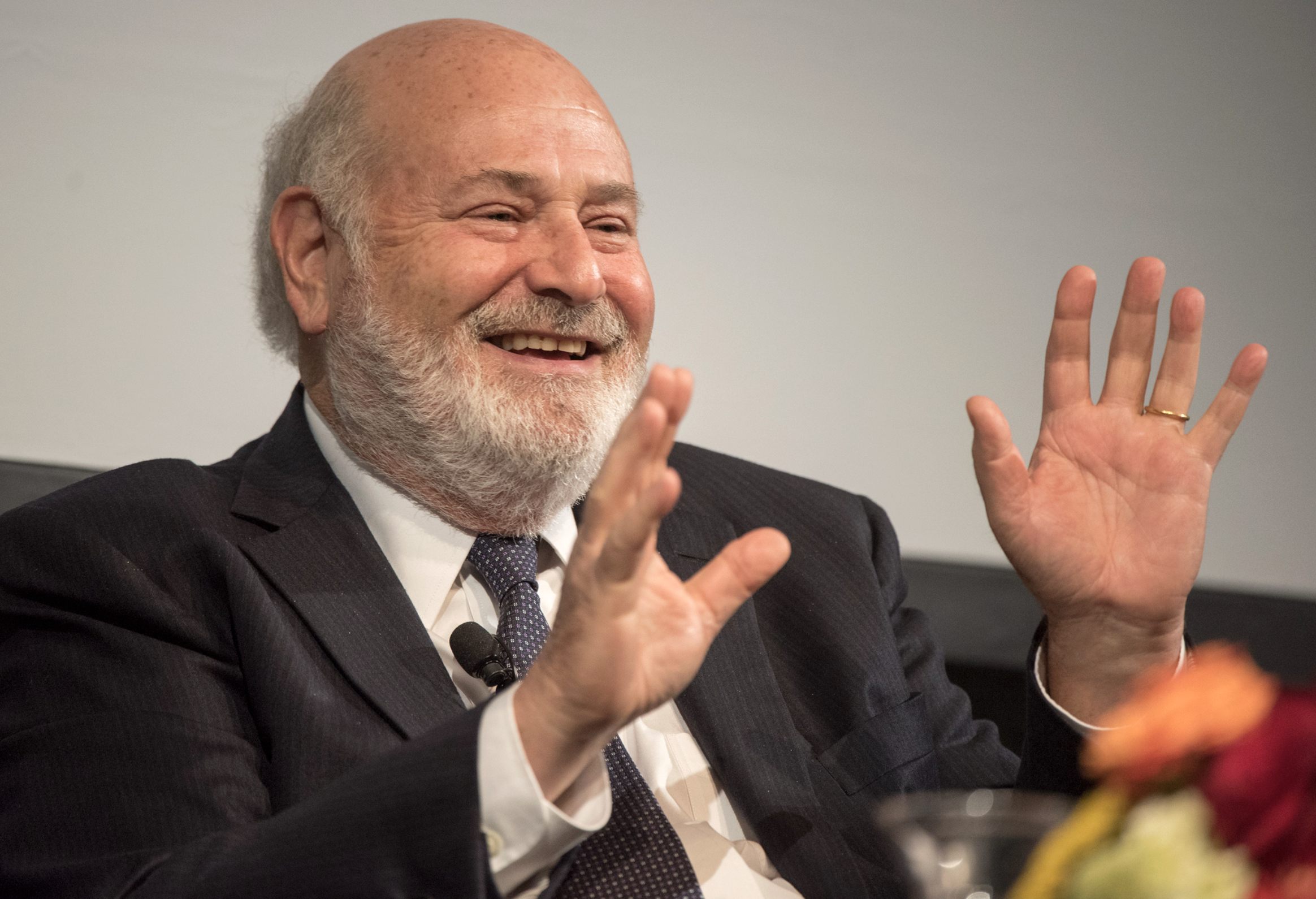
Director and Actor Rob Reiner and Wife Michele Singer Reiner Found Dead in Apparent Homicide 

Rob Reiner, the celebrated American filmmaker, actor, and cultural figure, and his wife, Michele Singer Reiner, were found dead in their Brentwood, Los Angeles home on Sunday, December 14, 2025, in what authorities are investigating as a double homicide. The couple—Reiner, age 78, and Michele, age 68—were discovered inside the residence by emergency responders after a call for medical aid around 3:30 p.m.; both suffered apparent stab wounds, which police believe resulted from a knife attack. The Los Angeles Police Department’s Robbery-Homicide Division is leading the investigation. 

Initial reports from sources including People suggest that the pair’s son, Nick Reiner, is a person of interest, with multiple insiders indicating he may be responsible for the killings. However, LAPD officials have not publicly confirmed a suspect or motives, and the department continues to conduct interviews and gather evidence. Authorities also have not released a definitive cause or motive for the attack as of this writing. 

Early Life and Career

Born Robert Norman Reiner on March 6, 1947, in the Bronx, New York, Reiner was the son of comedy legend Carl Reiner and actress–singer Estelle Lebost Reiner. He grew up surrounded by show business and later attended the University of California, Los Angeles (UCLA) Film School. Reiner’s career spanned nearly six decades in television and film. 

Reiner first gained national prominence as Michael “Meathead” Stivic on the groundbreaking 1970s sitcom All in the Family, a role for which he won two Emmy Awards. He parlayed his television success into a distinguished directing career beginning in the 1980s. 

Cinematic Legacy

As a director, Reiner became known for his versatility and deep influence on modern cinema. His 1984 debut, This Is Spinal Tap, helped define the mockumentary form. Subsequent films became enduring classics: Stand by Me (1986), The Princess Bride (1987), When Harry Met Sally… (1989), Misery (1990), and A Few Good Men (1992). Many of these films remain cultural touchstones decades after their release and are celebrated for their emotional resonance, humanity, and wit. 

Reiner also co-founded Castle Rock Entertainment, a production company behind major hits including Seinfeld and The Shawshank Redemption. His work across genres demonstrated both commercial success and critical acclaim, earning him a place among Hollywood’s most respected directors. 

Personal Life

Reiner’s personal life was equally rich. He was first married to director and actor Penny Marshall (1971–1981), adopting her daughter, Tracy Reiner. In 1989, he married Michele Singer, a photographer and producer he met while working on When Harry Met Sally…. The couple had three children together—Jake, Nick, and Romy—and shared decades of philanthropic work, including founding child advocacy organizations. 

Investigation and Family Impact

According to multiple sources, including People and Times of India coverage, Reiner and Singer’s bodies were found by their daughter, Romy Reiner, prompting immediate police involvement and the classification of the deaths as murder. While some outlets report that their son, Nick Reiner, is suspected in the killings, law enforcement has not publicly confirmed this detail and continues to investigate. No official motive has been released. 

The tragic deaths have sent shockwaves through Hollywood and beyond, with peers and public figures mourning the loss of Reiner’s artistic contributions and Singer’s own creative work. Family statements have requested privacy as grieving continues and investigations proceed. 

Significance and Legacy

Rob Reiner’s legacy is multifaceted—spanning television groundbreaking performances, transformative films, and influential production work. He helped shape the trajectory of American pop culture with works that combined humor, heart, and social insight. His films continue to be studied, quoted, and beloved by audiences worldwide. Beyond his artistic achievements, Reiner was a vocal advocate for social causes, leveraging his platform to support political and philanthropic initiatives. 

In the wake of his and Michele Singer Reiner’s deaths, tributes from colleagues, fans, and cultural institutions underscore the profound void left by their loss, even as questions linger about the circumstances surrounding this devastating event.
12/15/2025

  • Leave a comment
  • Share
    Director and Actor Rob Reiner and Wife Michele Singer Reiner Found Dead in Apparent Homicide

    Share link

Grýla: The Centuries-old Witch that Makes Krampus Look Tame  


Grýla is one of the oldest and most terrifying figures in Icelandic folklore, a monstrous ogress-witch whose origins reach back at least to the 13th century. She appears in medieval Icelandic texts such as the Prose Edda and later folk tales, long before Christmas became a softened, commercial holiday. Grýla is not merely a witch but a giantess—ancient, mountainous, and deeply tied to the harsh Icelandic landscape. She embodies hunger, cold, and punishment during the darkest time of year, when survival itself was once uncertain.

In early folklore, Grýla roamed the mountains during winter, descending into villages to hunt disobedient children. She carried a massive sack, collecting those who failed to obey their parents, skipped chores, or misbehaved during the long winter nights. Unlike later moral fables, these stories were not symbolic or gentle; Grýla was said to boil and eat children, a reflection of real fears surrounding famine, child mortality, and the brutal consequences of scarcity. Parents invoked her name as a genuine threat, not a playful warning.

Grýla’s family only deepens her terror. She is the mother of the Yule Lads, thirteen mischievous figures who now bring gifts but were originally far more sinister, stealing food and frightening households. Her companion, Leppalúði, is a lazy, shadowy troll, often portrayed as useless and cowardly—yet still monstrous. Most fearsome of all is her pet, the Yule Cat, a gigantic beast that devours anyone who does not receive new clothes by Christmas, reinforcing social rules around labor and preparedness.

One chilling folk story tells of Grýla appearing during a snowstorm, her footsteps echoing like cracking ice. A child who had ignored chores and mocked winter warnings hears scratching at the door, then silence. In the morning, footprints lead toward the mountains—but the child is gone. Such tales were told in candlelight, in isolated farmhouses surrounded by darkness, where belief in Grýla felt dangerously plausible. She was not defeated or banished; she simply returned to the mountains, waiting for the next winter.

What makes Grýla especially terrifying is that she represents inevitability. Unlike Krampus or other European figures who punish briefly, Grýla is ancient and enduring. She is hunger given form, winter personified, a reminder that nature does not forgive negligence. Scholars believe her legend evolved as a way to enforce social order and survival behaviors in a land where one mistake could mean death. Fear was a tool—and Grýla was its sharpest edge.

Over time, Icelandic authorities attempted to soften Grýla’s image. In the 18th century, officials discouraged parents from frightening children with her, concerned about psychological harm. As Christmas traditions modernized, Grýla became more symbolic, even humorous in some depictions. Yet the core of her story remained intact: she is still dangerous, still feared, and never fully domesticated like Santa Claus or other holiday figures.

Today, Grýla is celebrated throughout Iceland in festivals, decorations, books, and winter events. She appears in parades, museums, and modern art—often grotesque, sometimes darkly playful, but always imposing. Unlike many folklore figures, Grýla has not been erased or rewritten into harmless cheer. She survives because she speaks to something timeless: the fear of winter, the power of consequences, and the ancient understanding that darkness has teeth.

12/14/2025

  • Leave a comment
  • Share
    Grýla: The Centuries-old Witch that Makes Krampus Look Tame

    Share link

Russian Drone Strike Damages Chernobyl Containment: Scientists Warn of Long-Term Fallout 

Ukrainian authorities say that an unidentified military-grade drone, believed to be launched from territory currently controlled by Russian forces, struck the New Safe Confinement (NSC) structure at the Chernobyl Exclusion Zone earlier this week. While officials have not publicly assigned formal blame, the strike’s trajectory, flight path, and debris pattern have led investigators to suspect that the drone originated from beyond Ukraine’s defensive perimeter. Both Ukrainian and international watchdogs stress that verification is ongoing, but the working theory is that the attack was part of broader military operations in the region.

The explosion punctured an exterior panel of the massive steel arch that covers the remains of Reactor 4, the site of the 1986 nuclear disaster. Although the strike did not hit the reactor debris directly, engineers are concerned that a breach of this size could allow weather and wind to enter the enclosure, disturbing long-settled radioactive dust. The NSC, completed in 2016, was designed to contain radioactive materials safely for at least 100 years, making any damage to its integrity a matter of global concern.

Radiation monitors surrounding the zone have not detected major spikes, but scientists warn that the absence of a sudden surge does not eliminate long-term risks. The most significant danger is the potential for fine radioactive particles—especially cesium-137 and strontium-90—to become airborne inside the structure. If ventilation channels or micro-cracks allow even small amounts of dust to escape, contamination in nearby forests and waterways could slowly increase, threatening wildlife and ecological recovery efforts that have been underway for decades.

For humans, the immediate health threat to populations outside the exclusion zone remains low. However, any personnel working near the breach face elevated risks due to inhalation of radioactive aerosols, which can accumulate in the body and raise the long-term likelihood of cancer and other radiation-related illnesses. Environmental analysts also warn that a compromised shield complicates future remediation projects and could set back decades of hard-won stabilization work.

International nuclear safety experts have condemned the attack, calling it “reckless” and “irresponsible,” and urging that nuclear-related facilities be considered off-limits in any conflict. Ukraine has requested urgent assistance from European radiation-monitoring agencies to assess the full structural damage and begin planning repairs. While the situation is not yet a radiological emergency, experts emphasize that restoring the NSC’s airtight seal is now a high-priority global safety issue.


12/06/2025

  • Leave a comment
  • Share
    Russian Drone Strike Damages Chernobyl Containment: Scientists Warn of Long-Term Fallout

    Share link

Costco Sues the U.S. Government over Tariffs as Supreme Court Weighs on Their Legality 


Costco pushes back — sues to lock in tariff refunds before Supreme Court ruling

Costco has filed suit in the U.S. Court of International Trade, asking a judge to declare certain import tariffs unlawful, prevent future tariffs under the same orders, and guarantee refunds for duties the company already paid. The filing comes as the legal fate of those tariffs — imposed by the Donald J. Trump administration under the International Emergency Economic Powers Act (IEEPA) — winds its way through the courts. According to the complaint, U.S. Customs and Border Protection (CBP) denied Costco’s request for extra time to finalize tariff calculations, a move the retailer says jeopardizes its refund eligibility even if the tariffs are later ruled unlawful. 

Costco isn’t unique in this effort: it joins a growing list of companies — from manufacturers to food producers — seeking protection against potential losses. Given that the retailer is among America’s largest importers (with roughly one-third of U.S. sales derived from imported goods), the stakes are high. For Costco, failure to secure refunds could mean absorbing millions in extra costs or raising prices for consumers. 

The legal argument: executive overreach under IEEPA

At the heart of Costco’s case is a fundamental constitutional question: whether the IEEPA — a law originally designed to give presidents limited emergency powers over foreign transactions — can legitimately be used to impose sweeping, economy-wide import tariffs. Critics argue it cannot. IEEPA’s statutory language authorizes “regulation” of imports during a national emergency, but it never explicitly authorizes “tariffs,” “duties,” or “taxes” — power that under the Constitution belongs to Congress. 

Earlier this year, a panel of the U.S. Court of International Trade agreed, ruling the tariffs unlawful and enjoining their enforcement. The ruling found that using IEEPA for broad-based tariffs violated the nondelegation doctrine and the so-called “major questions” doctrine, which requires clear congressional authorization for policies of vast economic and political significance. 

That decision was affirmed by the U.S. Court of Appeals for the Federal Circuit, which maintained that the president had overstepped. But it also paused enforcement of the injunction and allowed tariffs to remain in effect pending appeal — leaving the door open for further litigation. 

Supreme Court steps in: major test for presidential tariff power

In September 2025, the Supreme Court agreed to hear consolidated appeals challenging the tariffs — including cases from V.O.S. Selections, Inc. and Learning Resources, Inc.. Oral arguments were heard in early November. Justices from across the ideological spectrum raised serious doubts about the administration’s use of emergency powers to impose sweeping tariffs, with some questioning whether IEEPA was ever meant for that purpose. 

The Court’s decision — expected potentially by mid-2026 — will have massive implications. A ruling against the tariffs could mean they must be rescinded and prior payments refunded, while a ruling upholding them would validate broad executive trade powers and reshape U.S. trade policy. Until then, the tariffs remain in effect, with relief for importers like Costco uncertain. 

Why Costco filed

before

a final ruling

Costco’s legal move is driven by timing: import entries subject to the tariffs are approaching “liquidation,” the customs process that finalizes duty assessments. Once entries liquidate, recovering paid tariffs becomes significantly more difficult — even if those tariffs are later struck down. By suing now, Costco aims to preserve refund rights and block further tariff application. 

In effect, the company is hedging — seeking judicial protection in advance of a ruling, rather than waiting and hoping refunds will be granted later. This proactive approach reflects the scale of potential liability: for a large importer with substantial imports, tariffs could amount to hundreds of millions. 

What to watch next

All eyes now are on the Supreme Court’s ruling. If the Court sides against the tariffs, expect a wave of refund claims — not only from Costco, but from dozens of other importers. However, even a favorable ruling doesn’t guarantee automatic refunds; many companies may still need to file separate claims under statutes like 19 U.S.C. § 1514 to recover duties. 

On the policy front, a decision against executive tariff powers could limit future administrations from imposing wide-ranging trade measures without explicit congressional authorization. Conversely, an upholding would mark a major expansion of presidential authority — potentially reshaping how trade policy is managed. Either way, the case could affect global supply chains, consumer prices, and the balance of power between Congress and the presidency.


12/02/2025

  • Leave a comment
  • Share
    Costco Sues the U.S. Government over Tariffs as Supreme Court Weighs on Their Legality

    Share link

First Prev 1 2 … 11 Next Last
0:00/???
  1. 1
    04 - Devi Sukta - Hymn to The Goddess, the Creative 6:48
    04 - Devi Sukta - Hymn to The Goddess, the Creative
    by Inner Splendor Media

    Share link

    0:00/6:48
  2. 2
    Body Scan Meditation 10:44
    Body Scan Meditation
    by Vajra Yoga Meditation

    Share link

    In cart Not available Out of stock
    0:00/10:44
  3. 3
    Introduction to Meditation 3:44
    Introduction to Meditation
    by Vajra Yoga Meditation

    Share link

    0:00/3:44
  4. 4
    Loving–Kindness Meditation: Metta 17:17
    Loving–Kindness Meditation: Metta
    by Vajra Yoga Meditation

    Share link

    In cart Not available Out of stock
    0:00/17:17
©2019 - 2006, Inner Splendor Media, LLC. All rights reserved. 
Inner Splendor and Music for Deep are all registered trademarks.

Some images ©

  • Log out

notes
0:00/???
  1. 1
    Rain Blue - Sounds of Ultimate Relaxation 15:14
    Rain Blue - Sounds of Ultimate Relaxation
    by Music for Deep Sleep

    Share link

    In cart Not available Out of stock
    0:00/15:14
0:00/???